The Blue Ridge and the ferry
The younger son John moved west into the Blue Ridge foothills of Amherst County. His son, another John, courted Agnes Witt there. Two days after Christmas in 1750 the Rev. Robert Rose, rector of St. Anne’s Parish, noted the wedding in his diary as “John Key to Agathy Witte.” Marcus Key believed Agnes was a daughter of William Witt, a French Huguenot who reached Virginia in 1699 and settled at Manakintown; that is not yet checked.
The gap and the glades
They farmed by the Tye River, in narrow valleys where the Piedmont meets the mountains. On 4 June 1764 John bought 71 acres “in Lackeys Thoroughfare,” a gap in Mount Horeb between Davis Creek and Corbin’s Creek, from “Henry Key,” who is called his brother in the deed. Later they moved to the open meadows below Findlay Mountain called the Glades, near a gap that took the family name, Key’s Gap.
The ferry at Hale’s Ford
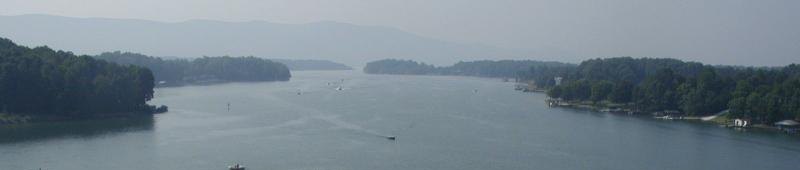
About 1782 they moved south to Bedford County. A week before Christmas 1783 John paid £300 for 440 acres “on the banks of Staunton River,” at Hale’s Creek. Among the witnesses were Joseph Key and John Waller Key, the earliest record to give John Waller Key his full name; with an older John Key standing beside him, the middle name told them apart.
John kept the ferry there. A 1787 court order pays a witness for “2 ferriages at Keys.” He was named surveyor of the road from Hale’s Ford to Goose Creek. In June 1783 he had proved that his wagon and team served the United States for four days, at ten shillings a day, which makes him a recognised patriot of the Revolution.
A day at the races
He liked a horse race. In 1785 he and his neighbour Nathaniel Tate were convicted “of unlawful Gaming in a Race Field”; John appealed and had his fine remitted. In 1789 he was charged again, for “winning a horse,” and that case was dismissed too. On 13 September 1788 “John Key and Agness his wife” sold the Staunton River land, “the tract he lives on,” to the merchant John Hook. He left no will, and he drops out of the records in December 1789.