A Royalist family and a long voyage
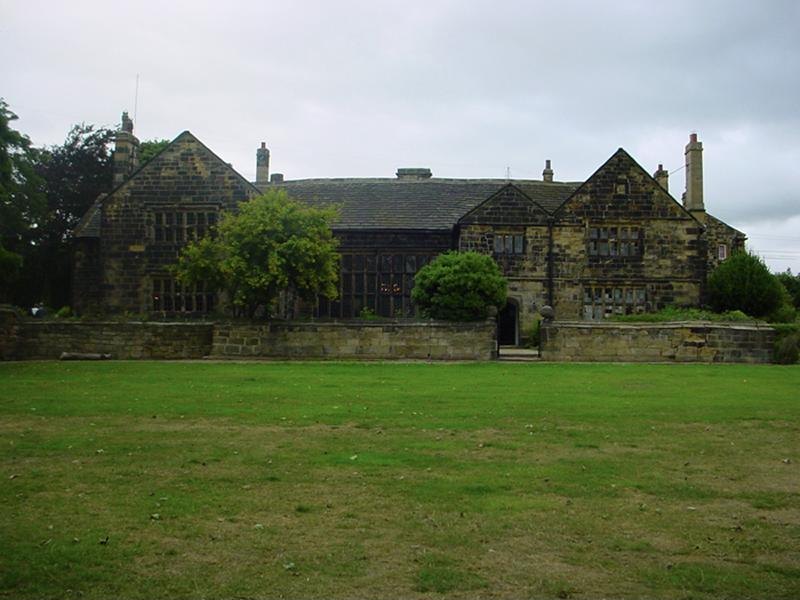
A few miles from Almondbury stands Oakwell Hall, a stone manor house near Birstall. In the 1640s it belonged to John Batte, a justice of the peace and one of the leading gentlemen of the district. Virginia records spell the name Batte; in Yorkshire it was usually Batt.
On the losing side
When the Civil War broke out in 1642, John Batte sided with King Charles and became a captain of foot in a Royalist regiment raised in the district. On 30 June 1643 the war came to his door. At Adwalton Moor, about a mile from Oakwell Hall, the Earl of Newcastle’s Royalists routed Lord Fairfax’s Parliamentarian army. Cannon and musket balls from the battlefield are on show at the hall today.
That was the high point. A year later the Royalists were crushed at Marston Moor near York, and John Batte surrendered to protect his family. Parliament sequestered his estates, taking them under its own control, and in 1649, the year King Charles was executed, he paid a fine of £364 to get them back. Family histories say the fine was first set at ten times that amount, and that by 1649 he was deep in debt.
A fresh start in Virginia
Virginia offered a way out. The colony had stayed loyal to the King, and through the Commonwealth years it took in Royalist families by the shipload; its people grew from about 15,000 in 1649 to 40,000 in 1662. John Batte already knew the place. He had been there before 1643 and held land in James City County, and in 1646 he had taken his wife and younger children over.
In 1649 he came back to England to raise money for something bigger. His brother Robert, a London grocer, petitioned Parliament’s Committee for Advance of Money on his behalf, and John went into partnership with Sir Thomas Danby of Farnley, near Leeds, in what their papers call a “joynt adventure.” Danby put in £1,500 and Batte borrowed another £1,500. In 1650 he sailed for Virginia again, with his two eldest sons and two of Danby’s boys in his care.
It did not end well. About 1652 John Batte and his son John were lost at sea on the way home to England, and Danby spent years trying to recover his money from the sons who were left. But the younger sons, Thomas and Henry, stayed in Virginia, and with them stayed the family’s one real asset there: the right to claim land.
How land was won: headrights
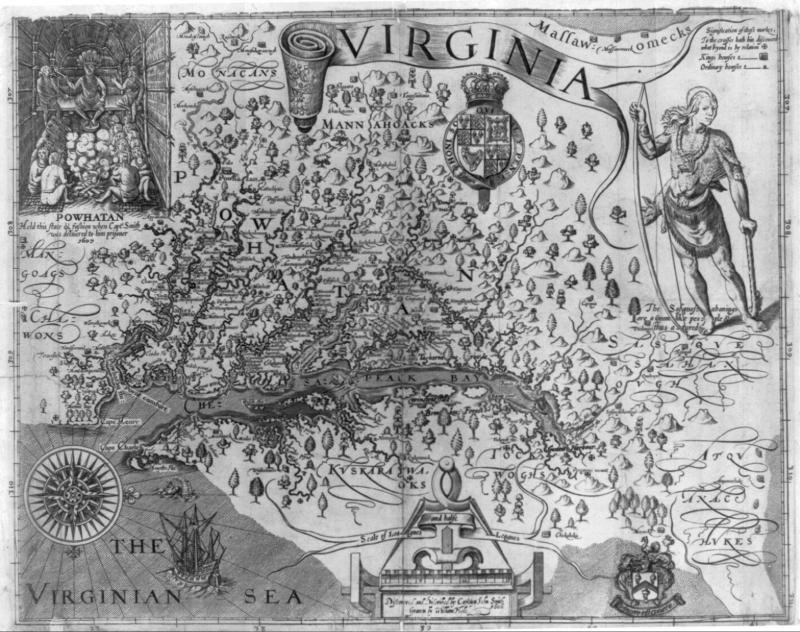
Virginia had more land than people. To fill it, the colony granted fifty acres for every person brought in to settle, a “headright.” The land did not go to the settler. It went to whoever paid the passage, which cost about six pounds a head.
Claiming it took several steps. The planter proved each arrival at the county court and received a certificate. The colony’s secretary turned the certificates into a right to fifty acres apiece. The county surveyor laid out a tract, and the governor signed a patent, the grant from the Crown, which usually names every person counted. Rights could be bought and sold, and saved up for years before they were used. The new owner paid a small yearly rent to the Crown and had to settle and plant the land within three years or lose it. The people counted received no land at all.
For a ruined Royalist family this was the surest way back to an estate. The land cost nothing beyond the passages, and the same people who earned it were the labour to clear it and grow tobacco. Most came as indentured servants, working off their fare for four to seven years before going free. The more people a family could gather, the larger the estate it could claim.
Where the Keys come in
The Battes gathered their people over many years, and it shows in the patent Thomas and Henry finally received on 29 April 1668: 5,878 acres on the south side of the James, for 118 people. The list reads like a roll call of the family’s own world. There are eight Battes and seven Mallorys, John Batte’s in-laws. Then come West Riding names: Crosland and Oldfield, names with old roots in Almondbury parish, Horsfall from Halifax, Foxcroft, Stringer, Priestley, Kitson. And there are eleven Keys: John Key the elder, his probable son John, Edmund, William, Mary, Dorothy, Susan, Abraham and three Elizabeths.
No record says when the Keys sailed, or under which Batte. Planters recruited first among their own neighbours, so the likeliest story is that the Keys came from the Battes’ own district and crossed sometime in the 1650s, perhaps with the 1650 venture, perhaps on a later sailing. Marcus Key, who studied the list closely, put their arrival between 1650 and 1660. The ship and the port are not recorded, though London is the likelier port. They landed on the James, where the Battes took up land on the south bank near the mouth of the Appomattox.
A note for readers
Two centuries later Charlotte Brontë visited Oakwell Hall, where her friend Ellen Nussey went to school, and put it in her novel Shirley (1849) as “Fieldhead.” She wrote that it “might at least be termed picturesque,” thanks to its irregular architecture and the grey, mossy colouring of age. Her story is set in 1811–12, long after the Battes had gone, but the house she described is the one the Keys would have known.
Sources for this chapter
- Oakwell Hall and the Civil Wars (Kirklees Museums, My Learning)
- Marcus M. Key, The Keys of Colonial Virginia (rev. ed. 2003), ch. I and Appendix C-2
- Library of Virginia, Research Notes 20, Virginia land patents and headrights
- Library of Virginia, Headrights
- John Batte family notes, citing the Danby papers, 1654–1706 (WikiTree and WeRelate; family-history compilations, not checked against the originals)
- Library of Virginia, Land Office Patents No. 6, p. 126 (the 1668 patent)